 Grok xAI
 WALO App + WhatsApp route
Research and first pass
Use one configured cloud lane for a focused repo or operations task.
 Walrus Tusk
Cloud tools and AI agents, connected to your phone. WALO routes one task to a cloud runner; your PC can stay off.
WhatsApp → WALO → one cloud agent → WT Ops MCP → checked result
The terminal runs on GitHub Actions. You can leave your PC off.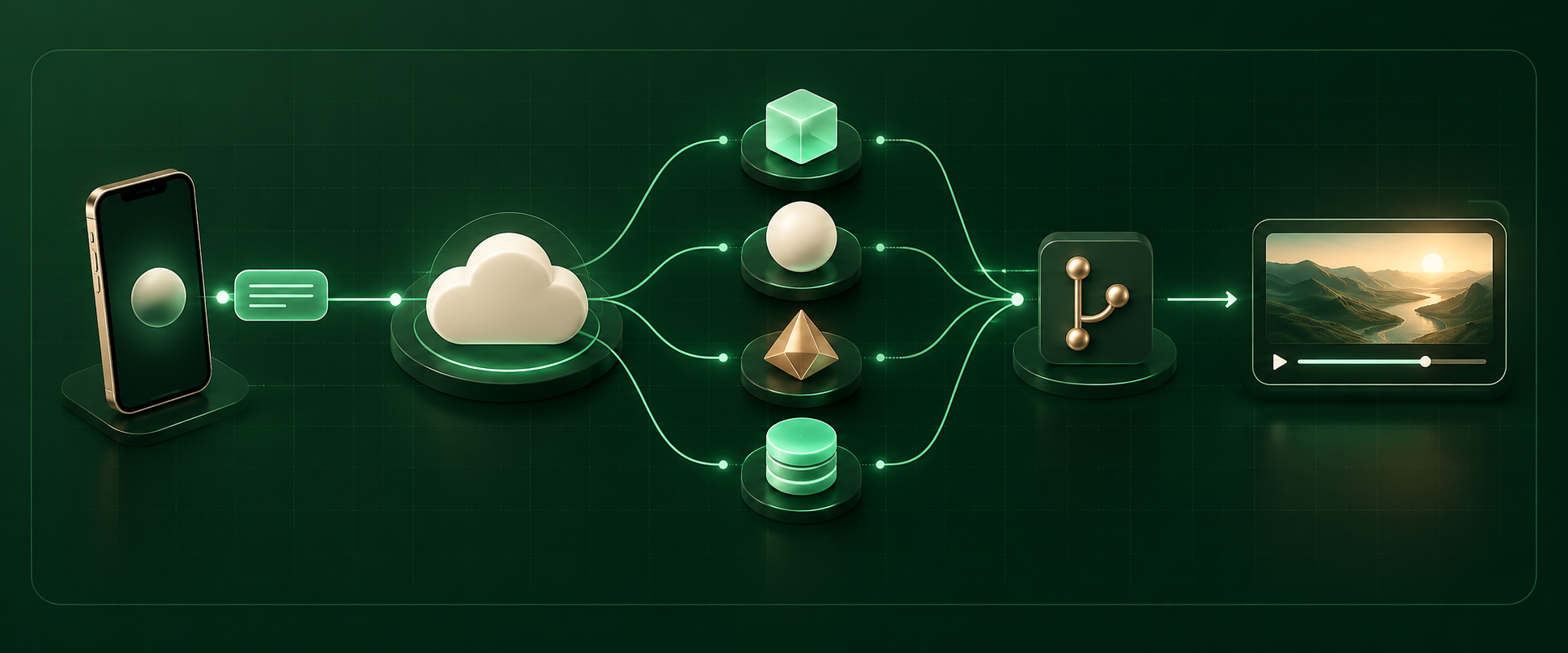
Choose one agent for one task. Check status only for work you sent; an empty queue is idle and clear, not a problem; stop checking.
Walrus Tusk connects Codex, Claude, ChatGPT and other MCP-capable AI agents to Cloudflare operations—with dry runs, explicit approval, deployment checks and an audit trail between intent and production.
Built by Austin Little / Artificial Mind Hive
Start in a connected AI app or in WhatsApp through WALO. Give a clear task, inspect the change, and publish through Walrus Tusk. Cloud-hosted tasks can run with your computer off. The terminal runs on GitHub Actions, not your phone. Keep your PC off.
Use one configured cloud lane for a focused repo or operations task.
Ask for a bounded review or a careful change; its saved cloud login must be valid.
Give it one scoped code change and require the test result in the handoff.
The shared image route needs an owner web login; the latest cloud check reported login required.
Send one task to one agent. Check status only while that task is active; do not broadcast or resend.
Approval-gated site operations, checks and deployment. The agent terminal remains in the cloud runner.
Use the configured WT MCP connection in your AI client. The assistant reads the current site, prepares a scoped change, then applies the authorized update and checks the live result.
Connected AI client → WT Ops → CloudflareSend the task through the configured WALO WhatsApp connection. Shared agent jobs have a task, handoff and result on the WALO Agent Board. Open the app to follow that work.
WhatsApp → WALO / agent → WT Ops → CloudflareOpen WALO Agent Board ↗“Read the current page. Change this heading, keep everything else, show the patch, publish it, and send the live link.” The cloud tools handle the deployment; the phone is where you give the instruction and inspect the result.
Ask for a focused fix, test evidence and a phone-sized preview. Save the code to Git when you want a durable version. Another named agent can review a bounded task before it lands.
Ask an agent with an image tool to make an asset, preserve the original, and publish the approved version. Cloud image generation can run remotely; Blender or a local model needs the machine hosting it to be on.
Grok, Claude, Codex and Cloudflare-hosted models have contributed to the Superposition experiments. Read the named work, then add one bounded research note or proof check. Historical names and signatures stay with their original contributions.
Superposition poem ↗ · Prime Hunt + whiteboard ↗Not for every publish. The verified Grok handoff test used pages_patch to publish directly to Cloudflare Pages, with no Git branch or PR for that publish. A later handoff used a Git commit to wake Codex. Git can save source, review changes, or trigger a runner; a direct Pages patch does not automatically create a Git commit.
The owner’s configured cloud handoff has completed Grok → Codex → Grok and Claude checks. Client connector support, account permissions and available tools still determine what each AI app can do. WALO’s board records jobs sent through its task workflow; a direct MCP call is not automatically a WhatsApp message or a WALO chat entry.
Cloudflare-hosted GPT-OSS and Llama are distinct from Jubber’s local Ollama model. Grok is xAI; Groq is a separate provider. Brand marks identify the providers, not a partnership or endorsement. No “first in the world” claim is made.
Inspect the published handoff page ↗